An author whose research practice synthesizes Kabbalistic ontology, the philosophical essay, and existential prose. Published continuously since 2006.
20+
YEARS OF PUBLICATION
17
GLOBAL PLATFORMS
4
LANGUAGES
Five Forms of Encounter
I · AUTHOR & GUIDE
The Collected Works
Something is happening, or continuing to happen, and no explanation has reached the core of it. Psychology names it. Religion blesses it. Neither answers the question: why this, why you, why now. These books do not comfort. They explain karma, fate, ancestral debt, the hidden laws behind what you are going through.
Your manuscript is ready. You don't know how to turn it from a file on your computer into a book sold worldwide — on Amazon, Apple Books, Kobo and dozens of other platforms — while keeping 100% of your rights and income. That path exists. It starts here.
You need text written by a human being, with real intellectual weight, not agency copy. A manifesto, an analytical article, an essay with a serious authorial voice and a clear inner stance.
Your model produces Russian that is grammatically correct and culturally empty. It passes the syntax test and fails the human test. You need someone who knows the difference between a word that is technically right and a word that carries meaning.
You are at a crossroads — in your career, your relationships, in your understanding of what is happening to you. Psychology gives you a framework. Religion gives you comfort. Neither gives you a precise map of causation. You want to understand the logic of what is happening, not receive a prognosis.
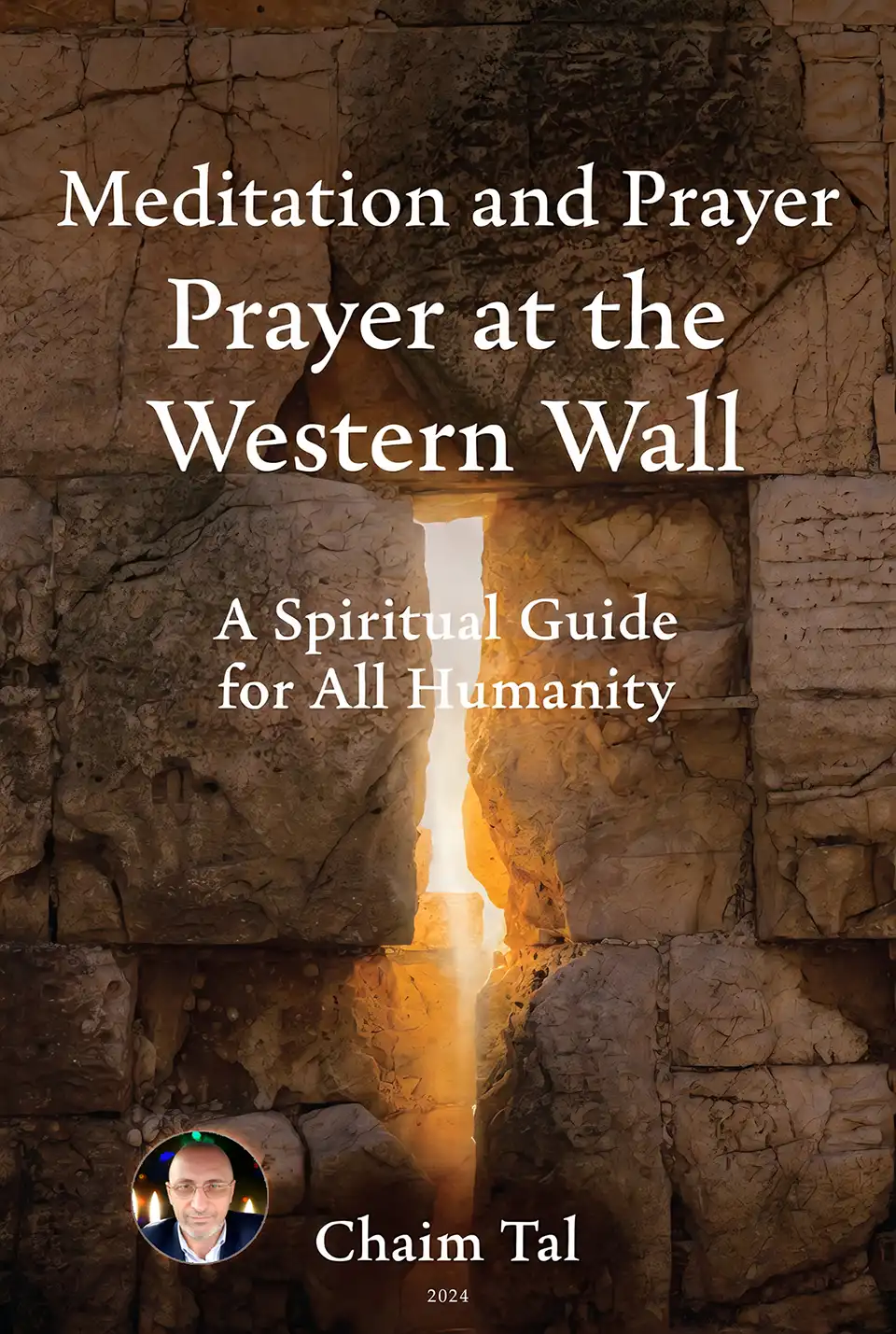
At the Western Wall, I've watched people stand in silence — some for minutes, some for hours. Their lips move, but their faces reveal something deeper: uncertainty. Am I worthy of this prayer?Will my words reach the Divine?Is my intention pure enough? That doubt—that holy uncertainty—is not weakness. It's the beginning of real faith. Because faith without doubt is just certainty wearing a religious mask. And certainty doesn't need prayer. It needs an audience. But doubt? Doubt humbles you. It makes you approach the stones with empty hands and an honest heart. 📖"Meditation and Prayer at the Western Wall" explores kavana — the art of intention that transforms doubt into sacred trust, uncertainty into presence.The path to the Wall is narrow. The light at the end is unknown. But you walk anyway.
Some places do not require explanation.They require presence. For years, people from all traditions have stood before these ancient stones — searching not for answers, but for stillness, trust, and a moment of truth with the Divine. Meditation and Prayer at the Western Wall was written for those moments. Not as instruction.Not as doctrine.But as a quiet inner framework — a way to arrive with intention, to stand with awareness, and to speak from the heart. This guide brings together a simple kavana (meditative focus), a personal prayer rooted in Jewish tradition, and Psalms long recited for protection and guidance — all expressed in clear, universal language. A practical Jewish meditation and prayer guide for the Western Wall.
Every tradition that takes language seriously — Kabbalistic, philosophical, poetic — arrives at the same observation from a different direction: meaning does not live in words. It lives in the relationship between them. In the Kabbalistic reading of the Torah, the white space on the parchment — the space between letters, between words, between verses — is not absence. It is the Ain Soph, the infinite, the undifferentiated divine ground from which the letters emerge. The letters are the finite. The silence is the infinite pressing through. This is not mysticism for its own sake. It has a structural implication for how we use language — and how we suffer from its misuse. When a person speaks without silence — without the pause that allows meaning to settle before the next word covers it — they are not communicating. They are filling. The words become a wall rather than a window. The listener stops receiving and starts waiting for the torrent to end.
Manage Consent
To provide the best experiences, we use technologies like cookies to store and/or access device information. Consenting to these technologies will allow us to process data such as browsing behavior or unique IDs on this site. Not consenting or withdrawing consent, may adversely affect certain features and functions.
Functional
Always active
The technical storage or access is strictly necessary for the legitimate purpose of enabling the use of a specific service explicitly requested by the subscriber or user, or for the sole purpose of carrying out the transmission of a communication over an electronic communications network.
Preferences
The technical storage or access is necessary for the legitimate purpose of storing preferences that are not requested by the subscriber or user.
Statistics
The technical storage or access that is used exclusively for statistical purposes.The technical storage or access that is used exclusively for anonymous statistical purposes. Without a subpoena, voluntary compliance on the part of your Internet Service Provider, or additional records from a third party, information stored or retrieved for this purpose alone cannot usually be used to identify you.
Marketing
The technical storage or access is required to create user profiles to send advertising, or to track the user on a website or across several websites for similar marketing purposes.